
China Outdoor High Voltage Vacuum Circuit Breaker Manufacturer, Supplier, Factory
Kexun Electric Co., Ltd. builds the Outdoor High Voltage Vacuum Circuit Breaker as a sheet-metal enclosure with bushings on top of the box, an operating mechanism inside and a mounting frame underneath, all delivered as one rigid assembly. The box is miniaturised stainless steel rather than painted carbon sheet, which is what keeps the unit clean on coastal and industrial sites. At 600 kg for the complete three-phase body, it is light enough to set on a pre-welded steel structure with a small crane, yet stiff enough to withstand wind speed up to 34 m/s. As a factory with in-house laser cutting, CNC machining, robotic welding and stamping, Kexun controls the enclosure geometry from the first cut to the last weld.
Box, Bushings and Frame
The stainless steel box encloses the integrated magnetic pole assembly, the optional current transformer and the operating mechanism. Three outgoing bushings pass through the top of the enclosure, and the unit is set on the customer's steel structure. Because the box and the mounting points are cut, formed and welded in the same shop, the dimensions stay consistent without on-site adjustment. This Outdoor High Voltage Vacuum Circuit Breaker leaves the factory with the installation drawing, so the civil crew can prepare the steelwork in parallel with the order.
What the Frame Carries
1. Pole line: three integrated magnetic poles on a 700±2 mm phase-to-phase pitch.
2. Mechanism: spring operating gear, motor and hand charging inside the box.
3. Transformer option: the current transformer set fits inside the same enclosure when ordered.
Setting on a Steel Structure
The 600 kg unit is erected on a steel structure, and the installation drawing shows the mounting arrangement. A small crane or a pole-mounted winch handles the lift, and the crew levels the frame before fixing it. Wind load up to 34 m/s is taken by the structure, so the steelwork must be designed for the full face area of the unit.
Erection Sequence
The drawing arrives with the shipment, the steel structure goes up in parallel with the factory build, and the unit is lifted only when the structure is accepted. Once the bolts are torqued, the crew checks that the phase-to-phase distance of 700±2 mm is still true, because a twisted frame is the most common cause of timing problems on a new installation.
Cable and Control Wiring
Power cables land on the line terminals behind the bushings, and the control cable enters the enclosure. The secondary wiring is kept inside the same protected volume as the mechanism, with closing, tripping, motor charging and auxiliary circuits kept apart. Control voltage is AC/DC 220 V, and the secondary circuit passes a 2 kV one-minute power-frequency test, which is the figure that matters when the control cable runs alongside the power cable.
The published ratings behind these clearances and the wiring are listed below; the distances in this section are set by the rated insulation values.
|
Number |
Item |
Unit |
Data |
|
1 |
Rated voltage |
kV |
40.5 |
|
2 |
Rated current |
A |
1250~2500 |
|
3 |
Rated frequency |
Hz |
50或60 |
|
4 |
Working frequency withstand voltage1min(wet)(dry) P to P、to earth/break |
kV |
80 /90/95 |
|
5 |
Lightning impulse withstand voltage(peak) P to P、to earth/break |
kV |
185 |
|
6 |
Rated short circuit break current |
kA |
25/31.5 |
|
7 |
Rated short circuit close current(peak) |
kA |
63/80 |
|
8 |
Rated peak withstand current |
kA |
63/80 |
|
9 |
4S short-term withstand current |
kA |
25/31.5 |
|
10 |
Rated operation circle |
|
分-0.1s-CO-3s-CO-6sCO-60s |
|
11 |
Rated short circuit current breaking times |
time |
30 |
|
12 |
Mechanical life |
time |
10000 |
|
13 |
Control voltage |
V |
AC/DC220 |
|
14 |
Secondary circuit 1min working frequency voltage |
KV |
2 |
Clearances Around the Unit
Phase-to-phase distance on the pole line is 700±2 mm, and the working clearances around the energised bushings must match the 40.5 kV insulation level, with 90 kV dry and 80 kV wet power-frequency withstand between phases and to earth, and 95 kV across the open break. The installation drawing marks the minimum approach distance for maintenance personnel, and a fence or a walkway must respect that line. Keeping the bushing line clear also matters for the 185 kV lightning impulse level, which assumes the gaps are not bridged by ladders or tools. This Outdoor High Voltage Vacuum Circuit Breaker is supplied with the drawing that fixes those distances.
The mechanical settings the crew checks after erection are listed below.
|
Number |
Item |
Unit |
Data |
|
1 |
Contact distance |
mm |
20±2 |
|
2 |
Contact overtravel |
mm |
4±0.5 |
|
3 |
Opening speed |
m/s |
1.4-1.8 |
|
4 |
Closing speed |
m/s |
0.4-0.8 |
|
5 |
Contact closing bounce time |
ms |
≤5 |
|
6 |
Phase to phase distance |
mm |
700±2 |
|
7 |
Different periods of three-phase opening and closing |
ms |
≤2 |
|
8 |
Resistance of each phase conductive loop |
μΩ |
<80 |
|
9 |
Closing time |
ms |
≤100 |
|
10 |
Opening time |
ms |
≤50 |
|
11 |
Weight |
Kg |
600 |
Sealing and Corrosion Details
The box is stainless steel, so the unit handles pollution grade IV and ambient from −30 to 60 °C without an extra hood. Storage before erection is covered from −40 to 85 °C, which means a unit left on site over a cold winter does not need a separate drying cycle. The laser-cut sheet and robot-welded seams are what keep the enclosure sound across 10,000 mechanical operations, on a site where external vibration or ground motion is disregarded in the design. This Outdoor High Voltage Vacuum Circuit Breaker is therefore a long-life enclosure rather than a painted cabinet that needs repainting.
Shop Control Over the Box
Laser cutting sets the blank sizes, CNC machining fixes the hole positions, robotic welding runs the long seams, and stamping forms the panels. Because all four steps happen in the Yueqing plant, the box and the mounting points come off the same drawing and stay consistent across batches.
Frequently Asked Questions
Q: How heavy is the unit and what lift is needed?
A: The complete three-phase body weighs 600 kg, so a small crane or a pole-mounted winch is enough for the lift. The installation drawing shows the mounting arrangement, and the crew levels the frame before fixing it.
Q: What does the installation drawing fix?
A: The drawing fixes the mounting arrangement, the phase-to-phase distance of 700±2 mm and the space needed around the bushings. It is sent with the shipment so the civil crew can prepare the steelwork in parallel with the factory build.
Q: How is the control cable brought into the box?
A: The control cable enters the enclosure and lands on the secondary terminals, with closing, tripping, motor charging and auxiliary circuits kept apart. Control voltage is AC/DC 220 V, and the secondary circuit passes a 2 kV one-minute power-frequency test.
Q: What clearances must be kept around the bushings?
A: The insulation level is 40.5 kV, with 90 kV dry and 80 kV wet power-frequency withstand between phases and to earth, 95 kV across the open break, and 185 kV lightning impulse peak. The installation drawing marks the minimum approach distance, and a fence or walkway must respect that line.
Q: Is the stainless steel box suitable for coastal sites?
A: Yes. The enclosure is stainless steel rather than painted carbon sheet, and the unit is rated for pollution grade IV and ambient from −30 to 60 °C. Storage before erection is covered from −40 to 85 °C.
Q: What wind load is the frame designed for?
A: The unit itself is rated for wind speed up to 34 m/s, but the wind load is taken by the customer's steel structure. The structure must be designed for the full face area of the unit, and the drawing fixes the mounting arrangement the steelwork must match.
Q: Can you supply the steel structure as well?
A: The steel structure is normally supplied by the customer's civil contractor to the installation drawing. Kexun supplies the breaker, the drawing and the test record, and the export sales managers discuss the interface with the civil engineer in English.
Q: What is the minimum order and payment terms?
A: The minimum order is one set. Standard models are held in stock, which keeps the delivery period short, and payment is by T/T or L/C. Custom work to customer drawings or samples is accepted, with a detailed discussion before production and a start only after the buyer confirms the drawing.
Related Products


Hot Products
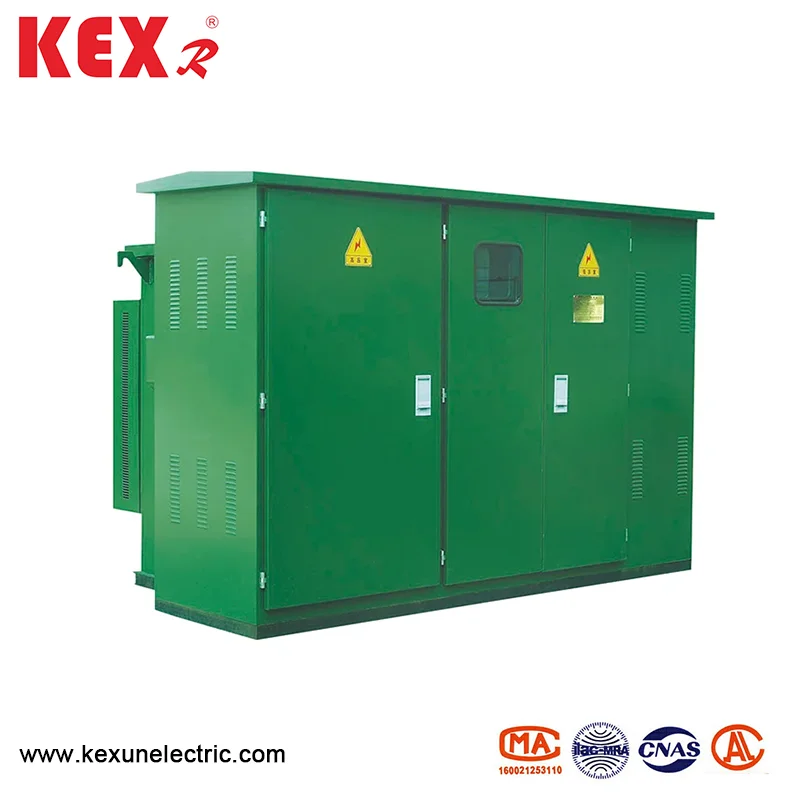
Pre-installed American Box Type Cabinet
Kexun is a power transmission and transformation equipment factory in China. Its beauty Pre-installed American Box Type Cabinet is well known for its good protective performance, high standardization, simple maintenance and wide applicability.
Model: ZBW-12
Brand:KEXR
GN38 Type Indoor HV Disconnector
The GN38 type indoor HV disconnector produced by China supplier is equipped with coaxial locking and perfect mechanical interlocking mechanism, which is compact and compact in appearance. It is designed and manufactured to meet the needs of the compact development of fixed high-voltage cabinets and ring network cabinets, and is the best switch for compact box-type switchgear.
Model: GN38
Brand:KEXR
Gas Insulated Electrical Panel
KXRM6-12 Gas insulated electrical panel independently developed and produced by Kexun Electric is widely used in 10kV/6K distribution system. Switch cabinet is modular unit mode, which can be combined according to different purposes; There are two categories: fixed unit combination and expandable unit, which meet the needs of flexible use of compact switchgear in various substations and are the first choice switch products for various urban and rural users' power distribution systems.
Model: KXRM6-12
Brand:KEXR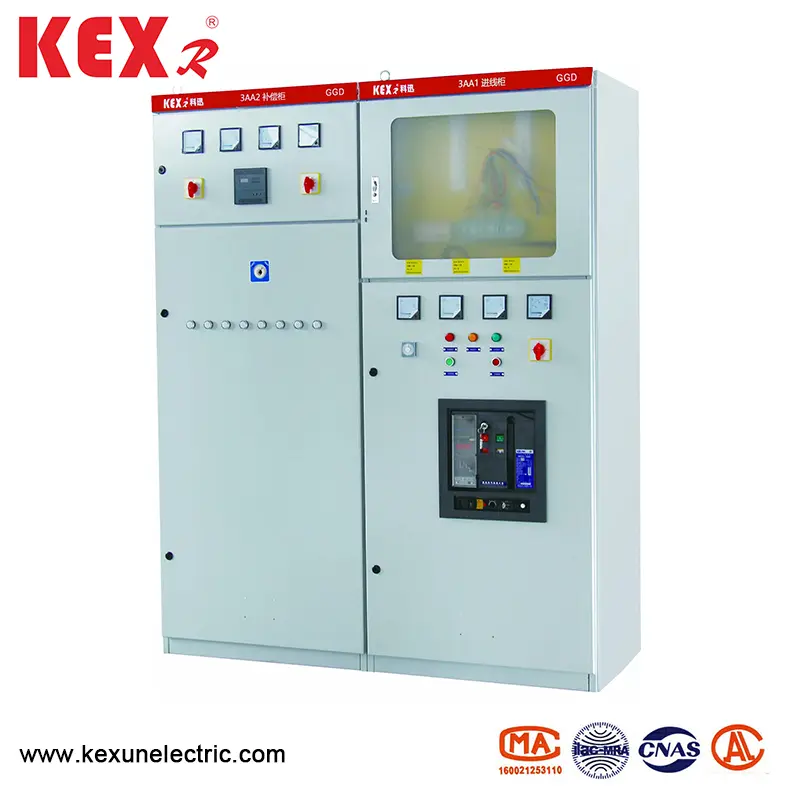
AC Low Voltage Distribution Cabinet
GGD Type AC low voltage distribution cabinet produced by China manufacturer Kexun is suitable for AC 50Hz distribution system of power users such as power plants, substations, factories and mines, with rated working voltage of 380V and rated working current of 3150. It is used for power conversion, distribution and control of power, lighting and distribution equipment.
Model:GGD
Brand:KEXR
Environmental Protection Unit
KXHXGN-12 type Environmental Protection unit produced by KEXR, a power transmission and distribution equipment supplier in China, is a 12kV gas-insulated ring network cabinet with environmental protection gas (such as dry air, nitrogen or mixed gas) as insulation medium, which is suitable for ring network power supply, terminal power supply and small-scale opening and closing stations of distribution networks.
Model: KXHXGN-12
Brand:KEXR
Box Type Fixed Metal Closed Switch Equipment
The main primary components of XGN2-12 Box Type Fixed Metal Closed Switch Equipment specially produced by Kexun in China Factory are all redesigned. Compared with the handcart equipment and GG-1(A)F equipment which are mainly used at present, XGN2-12 Box Type Fixed Metal Closed Switch Equipment has higher insulation level and protection level, and no phase-to-phase and phase-to-ground clapboards and insulating gas are used inside, and no secondary plug is used in the secondary circuit.
Model:XGN2-12
Brand:KEXR
- Related Blog
- Reviews
