
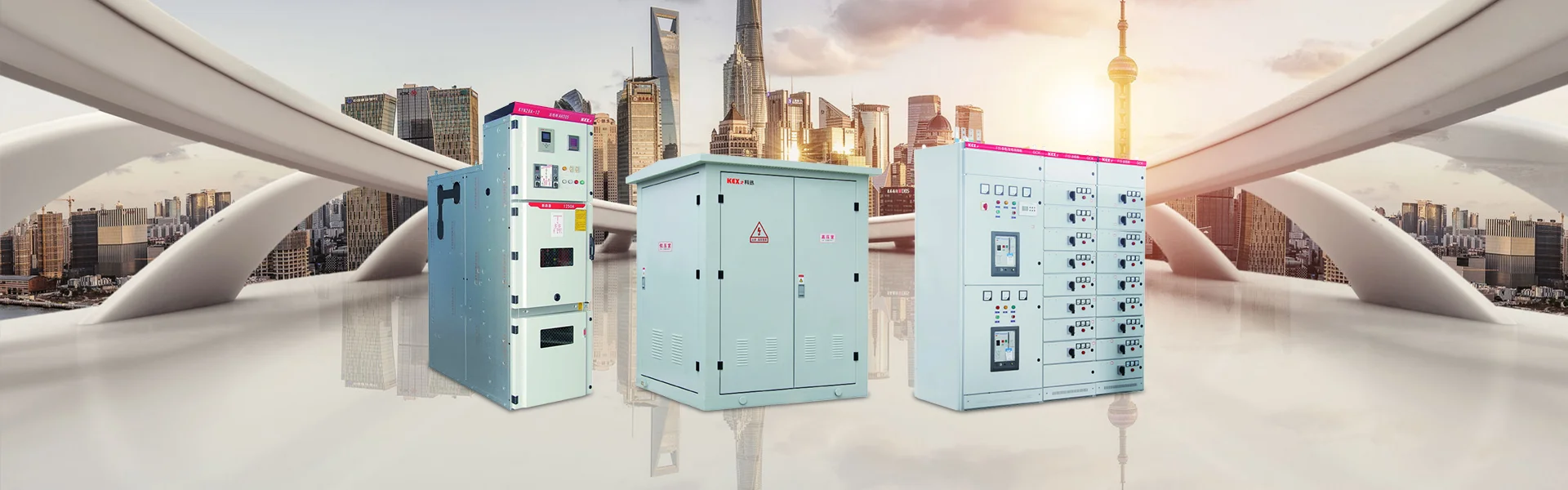
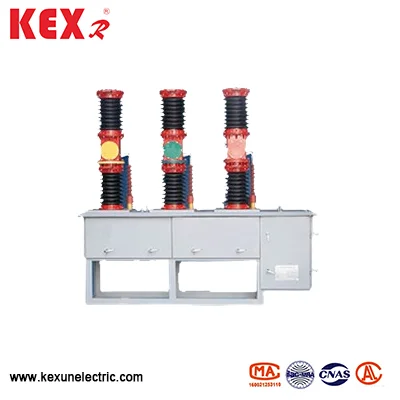
China High Voltage Outdoor Vacuum Circuit Breaker Manufacturer, Supplier, Factory
Kexun Electric Co., Ltd. engineers the High Voltage Outdoor Vacuum Circuit Breaker for exposed duty where no building shelters the frame. The declared ambient band runs from −30 to 60 °C, the installed site stays below 3000 m, the design resists wind up to 34 m/s and the pollution class is IV. Because the whole body sits in a miniaturised stainless steel box, salt spray, frost and direct sun act on the enclosure rather than on the mechanism inside. A factory GADRO environmental test chamber and a shielded partial-discharge room are used to check that behaviour before the unit ships, so the declared field conditions are tested figures rather than estimates.
Outdoor Duty From Cold to Heat
The operating ambient range of −30 to 60 °C is the band in which the mechanism, the spring drive and the secondary wiring are expected to work without heating or cooling aids. Greases and auxiliary parts are selected to stay mobile at the cold end and stable at the hot end, so this High Voltage Outdoor Vacuum Circuit Breaker closes and trips through a winter night and a summer afternoon without a separate enclosure climate system.
Storage Is Wider Than Operation
1. Operating ambient: −30 to 60 °C, the range in which the unit switches load and fault current.
2. Storage range: −40 to 85 °C, covering an unheated warehouse in winter or a sealed container in summer transit.
3. External vibration: vibration or ground motion outside the switchgear is disregarded in the design.
Altitude, Wind, Pollution
Three site limits govern where the unit can be installed without a special order. Altitude is held below 3000 m, because thinner air at height reduces external insulation and the bushing clearances are rated at the lower density. Wind load is designed up to 34 m/s, which sets the structural load the frame and its mounting steelwork must carry. Pollution grade IV declares that the outdoor surface insulation is selected for heavily contaminated sites rather than clean rural air.
Reading the Limits Together
A site high in the hills, windy by a coast and exposed to industrial fallout must satisfy all three limits at once, not one at a time. Where any limit is exceeded, the application is discussed with the factory before order rather than after energisation. The High Voltage Outdoor Vacuum Circuit Breaker is built to the declared band, and that is the band a tender should write into the specification.
Stainless Steel Against Weather
The enclosure is a miniaturised, high-quality stainless steel box rather than painted carbon sheet. On a coastal or industrial site that choice is the difference between a frame that keeps its finish and one that corrodes through after a few winters. The High Voltage Outdoor Vacuum Circuit Breaker encloses the integrated magnetic pole assembly, the optional current transformer and the operating mechanism inside that box, so weather acts on the shell rather than on the moving parts.
Why the Material Matters
Stainless resists the salt spray and sulphur compounds that attack ordinary coatings, and it avoids the repainting programme that a painted outdoor frame would need. Because the box is also compact and light, the whole ZW7-40.5 can be carried to a remote pole line without a heavy rig, which is why the stainless choice works for both corrosion and logistics.
Interrupters in Frost and Sun
Vacuum arc quenching has no oil or gas to leak or freeze, so the interrupter itself is largely indifferent to ambient temperature. The contacts part under a longitudinal magnetic field that keeps the arc diffuse, and at the current zero the gap recovers dielectric strength quickly whether the morning is −30 °C or the afternoon is 60 °C. That temperature independence is the reason the High Voltage Outdoor Vacuum Circuit Breaker is chosen for sites where a liquid or gas-insulated breaker would need heating or derating.
Declared Ratings for the Frame
The figures below are the published ratings the unit carries, whatever the site conditions around it.
|
Number |
Item |
Unit |
Data |
|
1 |
Rated voltage |
kV |
40.5 |
|
2 |
Rated current |
A |
1250~2500 |
|
3 |
Rated frequency |
Hz |
50或60 |
|
4 |
Working frequency withstand voltage1min(wet)(dry) P to P、to earth/break |
kV |
80 /90/95 |
|
5 |
Lightning impulse withstand voltage(peak) P to P、to earth/break |
kV |
185 |
|
6 |
Rated short circuit break current |
kA |
25/31.5 |
|
7 |
Rated short circuit close current(peak) |
kA |
63/80 |
|
8 |
Rated peak withstand current |
kA |
63/80 |
|
9 |
4S short-term withstand current |
kA |
25/31.5 |
|
10 |
Rated operation circle |
|
分-0.1s-CO-3s-CO-6sCO-60s |
|
11 |
Rated short circuit current breaking times |
time |
30 |
|
12 |
Mechanical life |
time |
10000 |
|
13 |
Control voltage |
V |
AC/DC220 |
|
14 |
Secondary circuit 1min working frequency voltage |
KV |
2 |
Storage Before Installation
Units that arrive on site before the foundation or the steelwork are ready are held in storage, and the declared storage range of −40 to 85 °C covers both an unheated winter store and a hot summer container. The mechanical and electrical settings are sealed at the factory; a period in storage does not reset the travel, the overtravel or the timing, so commissioning can proceed against the original test report when the frame is finally lifted onto the structure. The shielded partial-discharge room and the GADRO environmental test chamber are how the factory verifies the behaviour that the storage and operating limits claim.
Mechanical Data at Installation
The settings below are the mechanical values the unit is built and checked to.
|
Number |
Item |
Unit |
Data |
|
1 |
Contact distance |
mm |
20±2 |
|
2 |
Contact overtravel |
mm |
4±0.5 |
|
3 |
Opening speed |
m/s |
1.4-1.8 |
|
4 |
Closing speed |
m/s |
0.4-0.8 |
|
5 |
Contact closing bounce time |
ms |
≤5 |
|
6 |
Phase to phase distance |
mm |
700±2 |
|
7 |
Different periods of three-phase opening and closing |
ms |
≤2 |
|
8 |
Resistance of each phase conductive loop |
μΩ |
<80 |
|
9 |
Closing time |
ms |
≤100 |
|
10 |
Opening time |
ms |
≤50 |
|
11 |
Weight |
Kg |
600 |
Frequently Asked Questions
Q: What ambient temperature range does the unit operate in?
A: The operating ambient band is −30 to 60 °C. The spring mechanism, the drive and the secondary wiring are selected to work across that range without heaters or fans, so the breaker switches normally through both a cold winter night and a hot summer day.
Q: Does the rating change above 3000 m altitude?
A: The unit is declared for sites below 3000 m. At higher altitude the lower air density reduces external insulation, so a project above the limit should discuss the bushing and clearance arrangement with the factory before ordering.
Q: How much wind can the frame resist?
A: The design accounts for wind speeds up to 34 m/s. That figure is the structural load the frame and the support steelwork must carry, and it is the number a coastal or exposed-line engineer should match against the local wind study.
Q: What pollution class is the outdoor surface rated to?
A: The declared pollution grade is IV, the level for heavily contaminated industrial or coastal sites. The wet power-frequency withstand figure, rather than the dry one, is the conservative reference for a surface exposed to conductive dust and salt.
Q: Can the breaker be stored before installation?
A: Yes. The storage range is −40 to 85 °C, which covers an unheated warehouse in winter and a sealed container in summer. The factory mechanical and electrical settings remain valid, so commissioning follows the original test report once the unit is erected.
Q: Why is the enclosure made of stainless steel?
A: The box is high-quality stainless steel rather than painted sheet, which resists salt spray and industrial corrosion without a repainting programme. It encloses the integrated magnetic pole assembly, the optional current transformer and the operating mechanism, so weather acts on the shell, not on the moving parts.
Q: What factory tests back the weather ratings?
A: A GADRO environmental test chamber is used for climate checks and a shielded partial-discharge room for routine insulation checks. The QC records from these stages can be shared as photographs or video for buyer confirmation before dispatch.
Q: Does the vacuum interrupter need heating in winter?
A: No. The arc is quenched in vacuum with no oil or gas to freeze, and the gap recovers at current zero across the full ambient band. That independence is why this design is used where a liquid-insulated breaker would otherwise need heating or derating.
Field Conditions, Covered
From −30 to 60 °C on site and −40 to 85 °C in store, below 3000 m and against 34 m/s wind, the ZW7-40.5 pairs a stainless steel enclosure with vacuum interrupters that shrug off frost and sun. Tested in an environmental chamber and a shielded partial-discharge room, the unit is built for the outdoor conditions a distribution feeder actually meets, not the reference conditions it is listed at.
Related Products




Hot Products
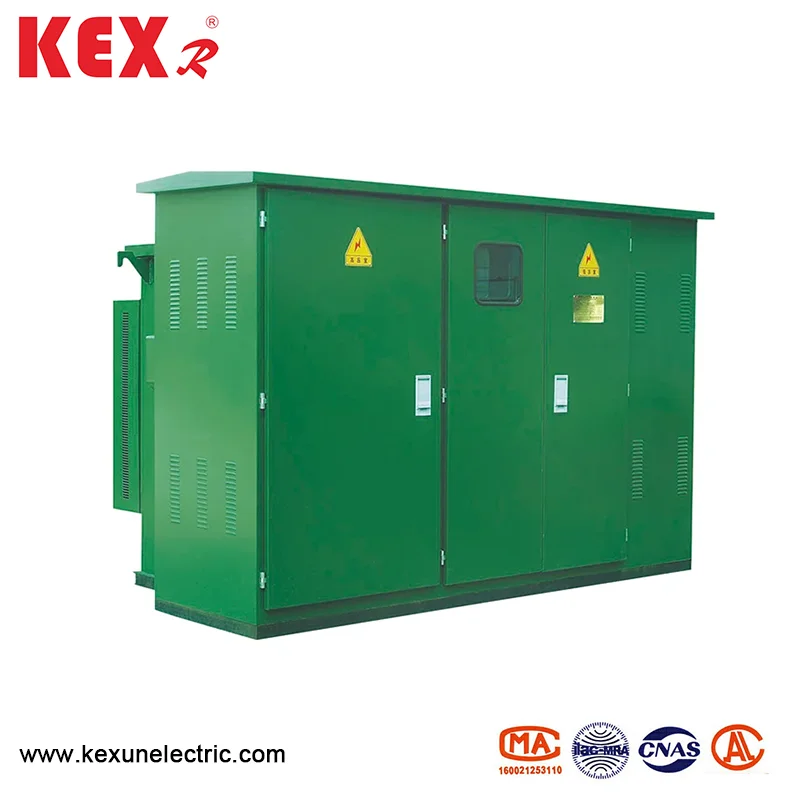
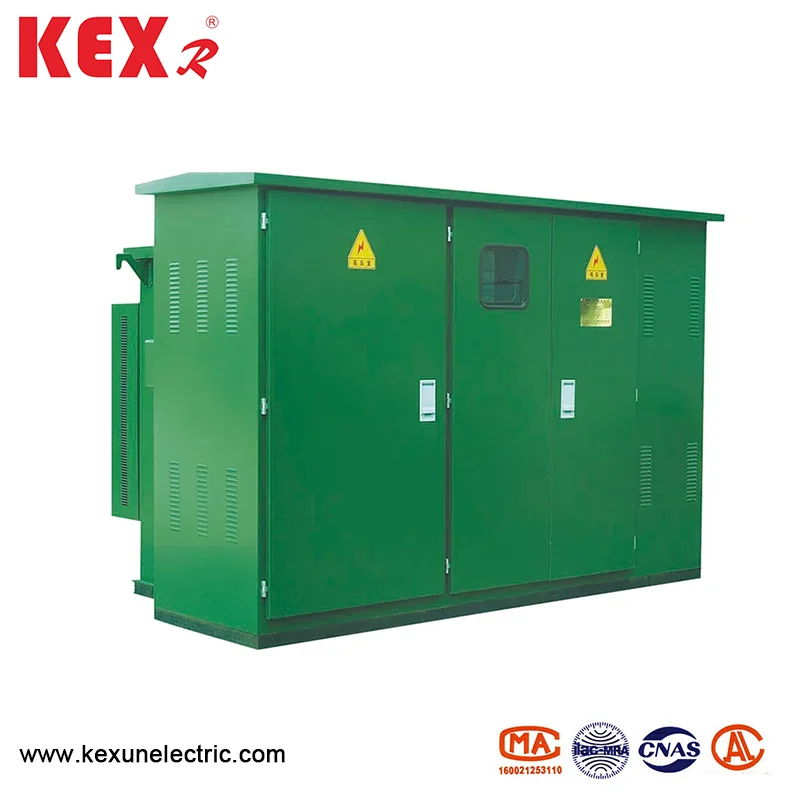
Pre-installed American Box Type Cabinet
Kexun is a power transmission and transformation equipment factory in China. Its beauty Pre-installed American Box Type Cabinet is well known for its good protective performance, high standardization, simple maintenance and wide applicability.
Model: ZBW-12
Brand:KEXR
GN38 Type Indoor HV Disconnector
The GN38 type indoor HV disconnector produced by China supplier is equipped with coaxial locking and perfect mechanical interlocking mechanism, which is compact and compact in appearance. It is designed and manufactured to meet the needs of the compact development of fixed high-voltage cabinets and ring network cabinets, and is the best switch for compact box-type switchgear.
Model: GN38
Brand:KEXR
Gas Insulated Electrical Panel
KXRM6-12 Gas insulated electrical panel independently developed and produced by Kexun Electric is widely used in 10kV/6K distribution system. Switch cabinet is modular unit mode, which can be combined according to different purposes; There are two categories: fixed unit combination and expandable unit, which meet the needs of flexible use of compact switchgear in various substations and are the first choice switch products for various urban and rural users' power distribution systems.
Model: KXRM6-12
Brand:KEXR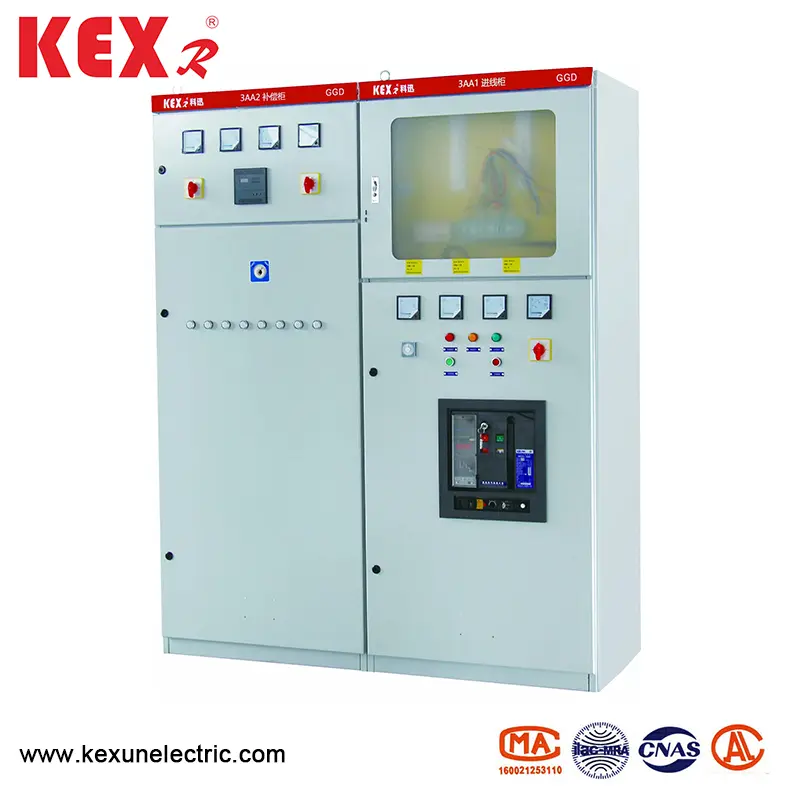
AC Low Voltage Distribution Cabinet
GGD Type AC low voltage distribution cabinet produced by China manufacturer Kexun is suitable for AC 50Hz distribution system of power users such as power plants, substations, factories and mines, with rated working voltage of 380V and rated working current of 3150. It is used for power conversion, distribution and control of power, lighting and distribution equipment.
Model:GGD
Brand:KEXR
Environmental Protection Unit
KXHXGN-12 type Environmental Protection unit produced by KEXR, a power transmission and distribution equipment supplier in China, is a 12kV gas-insulated ring network cabinet with environmental protection gas (such as dry air, nitrogen or mixed gas) as insulation medium, which is suitable for ring network power supply, terminal power supply and small-scale opening and closing stations of distribution networks.
Model: KXHXGN-12
Brand:KEXR
Box Type Fixed Metal Closed Switch Equipment
The main primary components of XGN2-12 Box Type Fixed Metal Closed Switch Equipment specially produced by Kexun in China Factory are all redesigned. Compared with the handcart equipment and GG-1(A)F equipment which are mainly used at present, XGN2-12 Box Type Fixed Metal Closed Switch Equipment has higher insulation level and protection level, and no phase-to-phase and phase-to-ground clapboards and insulating gas are used inside, and no secondary plug is used in the secondary circuit.
Model:XGN2-12
Brand:KEXR
- Related Blog
- Reviews
