

China Three Pole High Voltage Vacuum Circuit Breaker Manufacturer, Supplier, Factory
Kexun Electric Co., Ltd. builds the ZW7-40.5 as a China manufacturer of 40.5 kV outdoor switching equipment, and this frame is put forward as a Three Pole High Voltage Vacuum Circuit Breaker for substations and line sections that need a long, predictable mechanical life. The argument rests on numbers rather than adjectives: the mechanism is rated for 10,000 mechanical operations, the interrupter for 30 short-circuit breaking duties, and the whole 600 kg body keeps its travel, timing and resistance inside declared windows across that span. Because vacuum sealing removes oil, gas and contact lubrication from the routine list, the unit runs without scheduled overhaul, which is what lowers the lifetime cost a buyer really wants to know.
Ten Thousand Operations Explained
A mechanical life of 10,000 operations means the spring mechanism, the linkages and the contact compression are rated for that many open-close cycles before any wear limit is approached. For a feeder switched by routine load changes rather than by repeated faults, that figure sets the horizon at which an end-of-life decision is even considered.
|
Number |
Item |
Unit |
Data |
|
1 |
Rated voltage |
kV |
40.5 |
|
2 |
Rated current |
A |
1250~2500 |
|
3 |
Rated frequency |
Hz |
50或60 |
|
4 |
Working frequency withstand voltage1min(wet)(dry) P to P、to earth/break |
kV |
80 /90/95 |
|
5 |
Lightning impulse withstand voltage(peak) P to P、to earth/break |
kV |
185 |
|
6 |
Rated short circuit break current |
kA |
25/31.5 |
|
7 |
Rated short circuit close current(peak) |
kA |
63/80 |
|
8 |
Rated peak withstand current |
kA |
63/80 |
|
9 |
4S short-term withstand current |
kA |
25/31.5 |
|
10 |
Rated operation circle |
|
分-0.1s-CO-3s-CO-6sCO-60s |
|
11 |
Rated short circuit current breaking times |
time |
30 |
|
12 |
Mechanical life |
time |
10000 |
|
13 |
Control voltage |
V |
AC/DC220 |
|
14 |
Secondary circuit 1min working frequency voltage |
KV |
2 |
What the Rating Covers
1. Mechanical life: 10,000 operations of the closing and opening mechanism under normal duty.
2. Breaking endurance: 30 short-circuit breaking operations at rated current before the interrupter is considered spent.
3. Operating sequence: the rated duty follows the standard autoreclosing cycle for an outdoor feeder.
A Three Pole High Voltage Vacuum Circuit Breaker sized for 10,000 operations is, in practice, ordered once and left alone for the working life of the line rather than opened up every few seasons.
Contact Travel and Speed
Contact distance is set to 20 ± 2 mm, with 4 ± 0.5 mm of overtravel reserved so that contact pressure stays stable as the interrupter faces slowly erode. Opening speed runs at 1.4–1.8 m/s to part the contacts fast enough to stretch the arc before current zero, while closing is deliberately slower at 0.4–0.8 m/s to limit pre-strike arcing at make.
|
Number |
Item |
Unit |
Data |
|
1 |
Contact distance |
mm |
20±2 |
|
2 |
Contact overtravel |
mm |
4±0.5 |
|
3 |
Opening speed |
m/s |
1.4-1.8 |
|
4 |
Closing speed |
m/s |
0.4-0.8 |
|
5 |
Contact closing bounce time |
ms |
≤5 |
|
6 |
Phase to phase distance |
mm |
700±2 |
|
7 |
Different periods of three-phase opening and closing |
ms |
≤2 |
|
8 |
Resistance of each phase conductive loop |
μΩ |
<80 |
|
9 |
Closing time |
ms |
≤100 |
|
10 |
Opening time |
ms |
≤50 |
|
11 |
Weight |
Kg |
600 |
Why the Windows Matter
A travel window set once at the factory and then locked is what this frame relies on. A commissioning engineer checks the same figures with a calliper, and any reading outside the band points to a loose linkage rather than to wear inside the sealed interrupter.
When this Three Pole High Voltage Vacuum Circuit Breaker leaves the plant, contact distance, overtravel and both speeds are already set, so site work is verification rather than re-adjustment.
Bounce, Timing, Resistance
Closing bounce is held at 5 ms or less, and the three poles spread within 2 ms of one another on both opening and closing. Loop resistance per phase stays below 80 μΩ, and closing time is no more than 100 ms against an opening time of no more than 50 ms.
Read as a Maintenance Signal
Loop resistance is the quickest field number: a phase climbing above 80 μΩ usually means a loose joint, not a failed interrupter. Bounce above 5 ms points to a worn buffer or linkage. Both are cheap to check, and neither calls for opening the sealed pole.
Bounce, synchronism and resistance are the three numbers a Three Pole High Voltage Vacuum Circuit Breaker is judged against at handover, and they are the same numbers used later to decide whether the unit has drifted.
Why Routine Service Drops Away
Maintenance-free over the whole life is a specific claim, not a slogan. There is no oil level to top up, no gas pressure to monitor and no contact grease to renew, because the arc is quenched in a sealed vacuum bottle and the spring mechanism is the only moving assembly.
What Leaves the Schedule
1. No refilling: no insulating oil or gas is topped up between operations.
2. No contact dressing: the vacuum interrupter contacts are not opened, filed or re-gapped on site.
3. No lubrication: the mechanism runs without a scheduled grease interval.
For the owner of a Three Pole High Voltage Vacuum Circuit Breaker, that means the routine visit shrinks to a visual and electrical check rather than an overhaul.
Checks That Still Matter
Maintenance-free does not mean unmonitored. A few checks stay on the calendar because they catch external problems the sealed pole cannot see for itself.
1. Loop resistance: measure each phase and compare to the below-80 μΩ factory value.
2. Charging motor: confirm the spring charges by motor and still charges by hand crank.
3. Auxiliary contacts: verify the position signals reach the control panel after a few cycles.
4. Enclosure: inspect the stainless box, gaskets and bushings for tracking after storms.
These checks are what let a Three Pole High Voltage Vacuum Circuit Breaker run to its 10,000-operation limit without an unplanned outage.
Support Behind the Unit
Warranty runs 12 to 24 months depending on the order terms, and commissioning questions are answered in English by the export sales staff. Custom work to customer drawings or samples is accepted, with production starting only after the buyer confirms the drawing.
Frequently Asked Questions
Q: How many operations is the mechanism rated for?
A: The mechanical life is 10,000 operations, and the interrupter is rated for 30 short-circuit breaking operations at rated current. For a feeder that switches on load rather than on repeated faults, the mechanical figure is the one that sets the replacement horizon.
Q: What contact travel does the unit use?
A: Contact distance is 20 ± 2 mm with 4 ± 0.5 mm of overtravel, opening speed 1.4–1.8 m/s and closing speed 0.4–0.8 m/s. These are set at the factory and checked with a calliper at handover.
Q: Is the breaker really maintenance-free?
A: Routine overhaul is not scheduled, because there is no oil to top up, no gas pressure and no contact grease to renew. A light set of checks stays on the calendar: loop resistance, charging motor, auxiliary contacts and the enclosure.
Q: What does loop resistance tell me on site?
A: Each phase must stay below 80 μΩ. A rise usually signals a loose external joint rather than a failed vacuum bottle, which makes it a cheap first diagnostic instead of a trip to open the pole.
Q: How long are the closing and opening times?
A: Closing time is no more than 100 ms and opening time no more than 50 ms, with closing bounce under 5 ms and the three poles spread within 2 ms of one another.
Q: What warranty and service support are offered?
A: Warranty runs 12 to 24 months depending on order terms, and commissioning questions are answered in English by the export sales staff. Custom work to customer drawings or samples is accepted after a detailed pre-production discussion.
Q: How heavy is the unit and how is it mounted?
A: The whole three-phase body weighs 600 kg, which suits a small crane or a pole-mounted winch on a compact steel structure. Phase-to-phase spacing is 700 ± 2 mm, so the mounting steel must match that footprint.
Q: Can I get drawings before ordering?
A: Yes. Custom work to customer drawings or samples is accepted, with a detailed discussion before production and a start only after the buyer confirms the drawing.
Life Cycle in Numbers
10,000 mechanical operations, 30 fault duties, 20 ± 2 mm of travel and a loop resistance below 80 μΩ per phase are the figures this frame is built to hold, and they are also the figures that turn maintenance-free from a promise into a checkable set of limits. On a 40.5 kV feeder where an unplanned outage costs more than the switchgear, buying to those numbers is what keeps the unit in service for the working life of the line.
Related Products




Hot Products
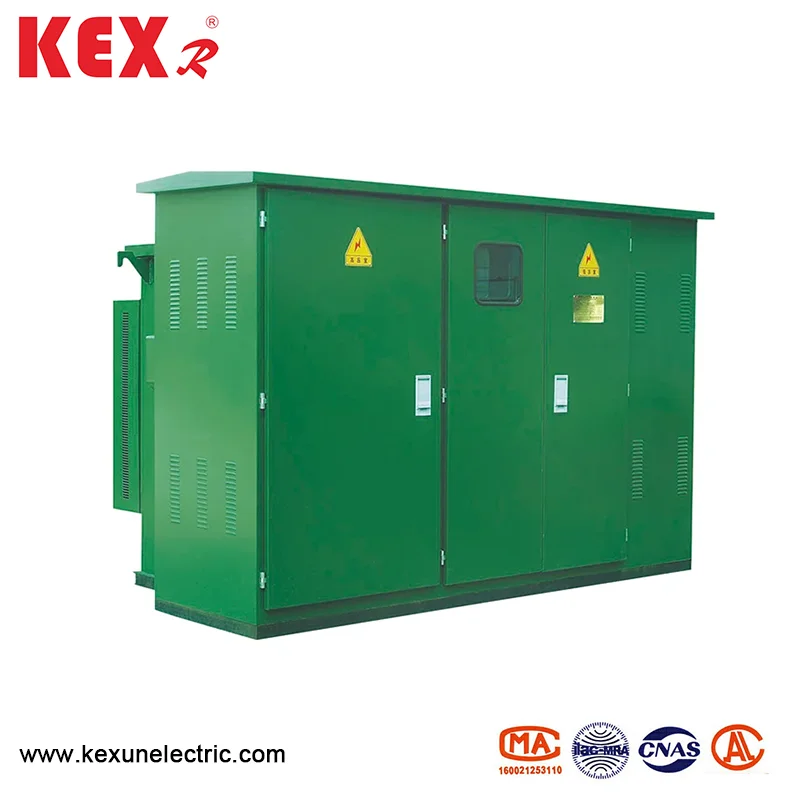
Pre-installed American Box Type Cabinet
Kexun is a power transmission and transformation equipment factory in China. Its beauty Pre-installed American Box Type Cabinet is well known for its good protective performance, high standardization, simple maintenance and wide applicability.
Model: ZBW-12
Brand:KEXR
GN38 Type Indoor HV Disconnector
The GN38 type indoor HV disconnector produced by China supplier is equipped with coaxial locking and perfect mechanical interlocking mechanism, which is compact and compact in appearance. It is designed and manufactured to meet the needs of the compact development of fixed high-voltage cabinets and ring network cabinets, and is the best switch for compact box-type switchgear.
Model: GN38
Brand:KEXR
Gas Insulated Electrical Panel
KXRM6-12 Gas insulated electrical panel independently developed and produced by Kexun Electric is widely used in 10kV/6K distribution system. Switch cabinet is modular unit mode, which can be combined according to different purposes; There are two categories: fixed unit combination and expandable unit, which meet the needs of flexible use of compact switchgear in various substations and are the first choice switch products for various urban and rural users' power distribution systems.
Model: KXRM6-12
Brand:KEXR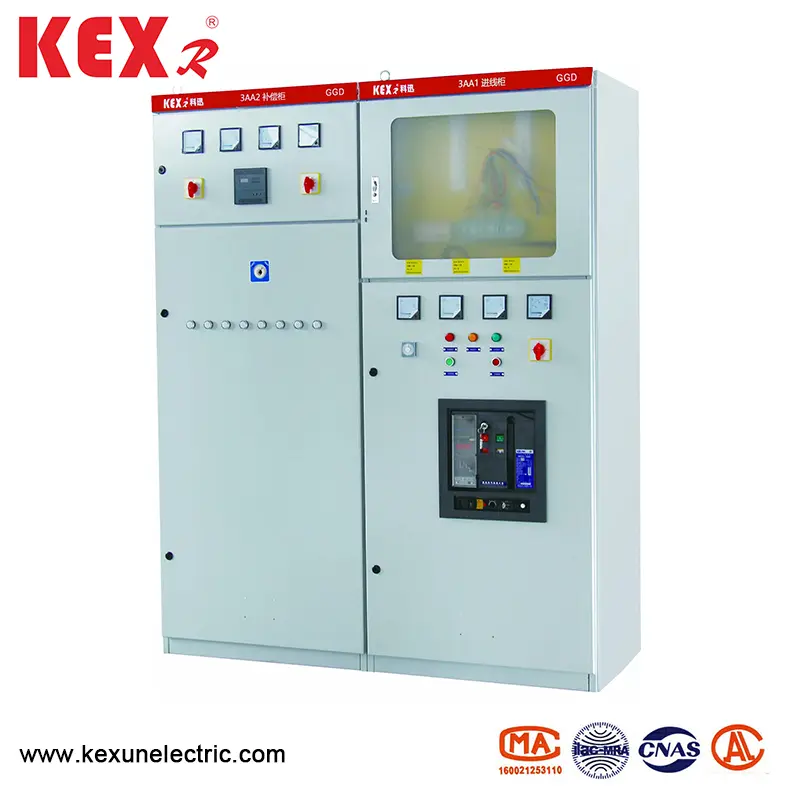
AC Low Voltage Distribution Cabinet
GGD Type AC low voltage distribution cabinet produced by China manufacturer Kexun is suitable for AC 50Hz distribution system of power users such as power plants, substations, factories and mines, with rated working voltage of 380V and rated working current of 3150. It is used for power conversion, distribution and control of power, lighting and distribution equipment.
Model:GGD
Brand:KEXR
Environmental Protection Unit
KXHXGN-12 type Environmental Protection unit produced by KEXR, a power transmission and distribution equipment supplier in China, is a 12kV gas-insulated ring network cabinet with environmental protection gas (such as dry air, nitrogen or mixed gas) as insulation medium, which is suitable for ring network power supply, terminal power supply and small-scale opening and closing stations of distribution networks.
Model: KXHXGN-12
Brand:KEXR
Box Type Fixed Metal Closed Switch Equipment
The main primary components of XGN2-12 Box Type Fixed Metal Closed Switch Equipment specially produced by Kexun in China Factory are all redesigned. Compared with the handcart equipment and GG-1(A)F equipment which are mainly used at present, XGN2-12 Box Type Fixed Metal Closed Switch Equipment has higher insulation level and protection level, and no phase-to-phase and phase-to-ground clapboards and insulating gas are used inside, and no secondary plug is used in the secondary circuit.
Model:XGN2-12
Brand:KEXR
- Related Blog
- Reviews
