
China 40.5kV Outdoor Vacuum Circuit Breaker Manufacturer, Supplier, Factory
Kexun Electric Co., Ltd. builds the 40.5kV Outdoor Vacuum Circuit Breaker for switching duty on 35 kV overhead and small-bay networks, where the insulation figures are what decide whether a unit clears the structure. The power-frequency withstand is published as 80 kV wet and 90 kV dry between phases or to earth, 95 kV across the open gap, and the lightning impulse level sits at 185 kV peak. A line designer reads those numbers against the pollution and lightning exposure of the site, then chooses between the 25 kA and 31.5 kA breaking class. Rated current runs from 1250 to 2500 A at 50 or 60 Hz, so the same frame serves Asian and overseas networks without a separate variant.
Why 40.5 kV Matters
The 40.5 kV rating is the equipment class that sits on a 35 kV system. It is not the nominal line voltage but the insulation class the unit is built and tested to, and that gap between system and rated value is the margin a designer relies on when surges and pollution accumulate at the same pole. Choosing a 40.5kV Outdoor Vacuum Circuit Breaker one class above the operating voltage is standard practice on exposed feeders.
Where the Class Sits
On a 35 kV network the breaker carries normal load and clears fault current, while its rated insulation withstand absorbs the temporary and transient overvoltages that a distribution line sees. The 1250 to 2500 A continuous band matches feeder currents from rural branches to denser urban sections, and the 50 or 60 Hz rating keeps the design interchangeable across grids.
Insulation Levels in Practice
Three clearance paths are checked in the same test sequence: phase to phase, each phase to earth, and the open break between the contacts. The published values for a 40.5kV Outdoor Vacuum Circuit Breaker are 80 kV wet and 90 kV dry for the one-minute power-frequency test on the first two paths, 95 kV across the open break, and 185 kV peak lightning impulse on all three. A designer treats the open-break figure as the one that protects personnel during a line side earth.
Reading the Three Paths
1. Phase to phase: 80 kV wet / 90 kV dry, the level that defines the phase spacing on the steel structure.
2. Phase to earth: the same 80 / 90 kV pair, applied to the frame and the earthed enclosure.
3. Open break: 95 kV, the gap that must hold when the line side remains live and the operator works downstream.
Wet and Dry Withstand
The one-minute power-frequency test is run in two conditions, and the wet value is the lower of the two. Rain on the bushings lowers the surface insulation, so the 80 kV wet figure is the conservative number an outdoor installation must meet, while the 90 kV dry figure shows the margin available on a clean, dry day. The secondary circuit is separately checked at 2 kV for one minute, which is the control-wiring level a panel engineer should verify before pulling cables.
Lightning impulse at 185 kV peak covers the surge that arrives on an overhead feeder during a storm. Because the interrupter gap is in vacuum and recovers dielectric strength fast at current zero, the break withstands repeated impulses without tracking across the contacts.
Choosing 25 or 31.5 kA
The breaking class is the number most often chosen after a fault-level study, and the two options are 25 kA and 31.5 kA rated short-circuit breaking current. The making peak and peak-withstand figures follow the same step: 63 kA for the 25 kA class and 80 kA for the 31.5 kA class, with the four-second short-time withstand equal to the breaking current. If the calculated fault level sits close to a boundary, move one class up, because network growth raises the fault contribution before the breaker reaches its service limit.
|
Number |
Item |
Unit |
Data |
|
1 |
Rated voltage |
kV |
40.5 |
|
2 |
Rated current |
A |
1250~2500 |
|
3 |
Rated frequency |
Hz |
50或60 |
|
4 |
Working frequency withstand voltage1min(wet)(dry) P to P、to earth/break |
kV |
80 /90/95 |
|
5 |
Lightning impulse withstand voltage(peak) P to P、to earth/break |
kV |
185 |
|
6 |
Rated short circuit break current |
kA |
25/31.5 |
|
7 |
Rated short circuit close current(peak) |
kA |
63/80 |
|
8 |
Rated peak withstand current |
kA |
63/80 |
|
9 |
4S short-term withstand current |
kA |
25/31.5 |
|
10 |
Rated operation circle |
|
分-0.1s-CO-3s-CO-6sCO-60s |
|
11 |
Rated short circuit current breaking times |
time |
30 |
|
12 |
Mechanical life |
time |
10000 |
|
13 |
Control voltage |
V |
AC/DC220 |
|
14 |
Secondary circuit 1min working frequency voltage |
KV |
2 |
How the Classes Pair
1. 25 kA class: the entry-level breaking duty for the 40.5kV Outdoor Vacuum Circuit Breaker, breaking 25 kA, making and withstanding 63 kA peak, holding 25 kA for four seconds.
2. 31.5 kA class: breaks 31.5 kA, makes and withstands 80 kA peak, holds 31.5 kA for four seconds.
3. Sequence: the rated operating cycle and the 30 short-circuit breaking operations apply to both classes.
Site Conditions That Shift Ratings
The table values are declared for a reference site, and real conditions move what they mean in service. Ambient temperature spans −30 to 60 °C, altitude stays below 3000 m, wind load is limited to 34 m/s and the pollution class is IV. When a unit goes to a colder or higher location, or to a coastline with heavy salt spray, the designer applies the site against those limits rather than against an idealised reference. The figures below are the mechanical and electrical settings the factory ships; the site application decides which breaking class and which clearance arrangement to pair with them.
|
Number |
Item |
Unit |
Data |
|
1 |
Contact distance |
mm |
20±2 |
|
2 |
Contact overtravel |
mm |
4±0.5 |
|
3 |
Opening speed |
m/s |
1.4-1.8 |
|
4 |
Closing speed |
m/s |
0.4-0.8 |
|
5 |
Contact closing bounce time |
ms |
≤5 |
|
6 |
Phase to phase distance |
mm |
700±2 |
|
7 |
Different periods of three-phase opening and closing |
ms |
≤2 |
|
8 |
Resistance of each phase conductive loop |
μΩ |
<80 |
|
9 |
Closing time |
ms |
≤100 |
|
10 |
Opening time |
ms |
≤50 |
|
11 |
Weight |
Kg |
600 |
Reading the Data Sheet
The ratings table consolidates voltage, current, insulation and fault duty in one place, so a procurement engineer can convert a line study into an order without chasing separate documents. The same 40.5kV Outdoor Vacuum Circuit Breaker keeps its continuity rating of 1250 to 2500 A, its control supply of AC/DC 220 V and its 185 kV impulse level across both breaking classes.
Certification Behind the Numbers
Kexun Electric Co., Ltd. holds ISO9001, ISO14001 and ISO45001 management system certificates, and the product carries Type Test certification together with CCC, with CQC also noted. Those are the references a buyer attaches to a tender that asks for certified distribution equipment rather than untested prototypes.
Frequently Asked Questions
Q: What do the 80, 90 and 95 kV figures mean?
A: They are the one-minute power-frequency withstand voltages, stated on the three clearance paths. Between phases and to earth the value is 80 kV wet and 90 kV dry, and across the open contact gap it is 95 kV. The wet number is the conservative one for an exposed outdoor pole.
Q: How do I choose between the 25 and 31.5 kA class?
A: Run the fault-level study for the feeder, then pick the class one step above the calculated value. The 25 kA class pairs with a 63 kA making and peak-withstand level, and the 31.5 kA class pairs with 80 kA; the four-second short-time withstand matches the breaking current in each case.
Q: What is the 185 kV impulse rating for?
A: It is the lightning impulse peak withstand on the same phase-to-phase, phase-to-earth and open-break paths. It covers the surge that an overhead feeder picks up in a storm, and the vacuum gap recovers quickly enough to hold the next transient without restrike.
Q: Does altitude change the rating?
A: The unit is declared for sites below 3000 m. Above that altitude air density drops and the external insulation degrades, so a designer must check the application against the limit and choose the bushings and clearances the site requires.
Q: Which certificates accompany the unit?
A: The management systems are certified to ISO9001, ISO14001 and ISO45001, and the product carries Type Test and CCC certification, with CQC also referenced. These are the references a tender can quote without adding any further certificate claim.
Q: What current and frequency does the frame cover?
A: Rated continuous current is 1250 to 2500 A at 50 or 60 Hz. That band covers light rural feeders and denser urban branches, and the dual frequency keeps the same ZW7-40.5 usable on Asian and overseas networks.
Q: Can the breaker be applied in a pollution grade IV site?
A: Yes, the declared pollution grade is IV. Heavy industrial or coastal sites sit in that band, and the wet 80 kV withstand figure is the number that governs the bushing arrangement rather than the dry value.
Q: What control supply does the unit use?
A: Closing and tripping work on AC/DC 220 V, which matches the usual station battery and AC auxiliary arrangements. The secondary circuit withstands 2 kV for one minute in the routine test, a figure worth checking when control cables run alongside power cables.
Related Products





Hot Products
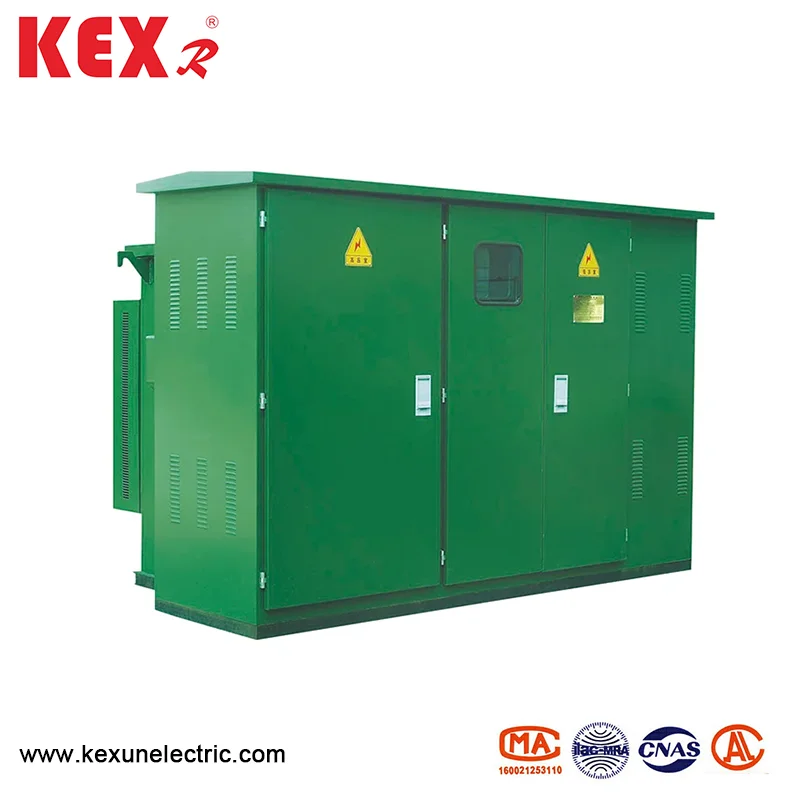
Pre-installed American Box Type Cabinet
Kexun is a power transmission and transformation equipment factory in China. Its beauty Pre-installed American Box Type Cabinet is well known for its good protective performance, high standardization, simple maintenance and wide applicability.
Model: ZBW-12
Brand:KEXR
GN38 Type Indoor HV Disconnector
The GN38 type indoor HV disconnector produced by China supplier is equipped with coaxial locking and perfect mechanical interlocking mechanism, which is compact and compact in appearance. It is designed and manufactured to meet the needs of the compact development of fixed high-voltage cabinets and ring network cabinets, and is the best switch for compact box-type switchgear.
Model: GN38
Brand:KEXR
Gas Insulated Electrical Panel
KXRM6-12 Gas insulated electrical panel independently developed and produced by Kexun Electric is widely used in 10kV/6K distribution system. Switch cabinet is modular unit mode, which can be combined according to different purposes; There are two categories: fixed unit combination and expandable unit, which meet the needs of flexible use of compact switchgear in various substations and are the first choice switch products for various urban and rural users' power distribution systems.
Model: KXRM6-12
Brand:KEXR
AC Low Voltage Distribution Cabinet
GGD Type AC low voltage distribution cabinet produced by China manufacturer Kexun is suitable for AC 50Hz distribution system of power users such as power plants, substations, factories and mines, with rated working voltage of 380V and rated working current of 3150. It is used for power conversion, distribution and control of power, lighting and distribution equipment.
Model:GGD
Brand:KEXR
Environmental Protection Unit
KXHXGN-12 type Environmental Protection unit produced by KEXR, a power transmission and distribution equipment supplier in China, is a 12kV gas-insulated ring network cabinet with environmental protection gas (such as dry air, nitrogen or mixed gas) as insulation medium, which is suitable for ring network power supply, terminal power supply and small-scale opening and closing stations of distribution networks.
Model: KXHXGN-12
Brand:KEXR
Box Type Fixed Metal Closed Switch Equipment
The main primary components of XGN2-12 Box Type Fixed Metal Closed Switch Equipment specially produced by Kexun in China Factory are all redesigned. Compared with the handcart equipment and GG-1(A)F equipment which are mainly used at present, XGN2-12 Box Type Fixed Metal Closed Switch Equipment has higher insulation level and protection level, and no phase-to-phase and phase-to-ground clapboards and insulating gas are used inside, and no secondary plug is used in the secondary circuit.
Model:XGN2-12
Brand:KEXR
- Related Blog
- Reviews
