
China 40.5kV Three Pole Vacuum Circuit Breaker Manufacturer, Supplier, Factory
Kexun Electric Co., Ltd. designs the 40.5kV Three Pole Vacuum Circuit Breaker around a common drive shaft and a rigid frame, because synchronised three-pole movement is what keeps timing inside its tolerance band after thousands of operations. All three vacuum interrupters open and close through one mechanism, set at a fixed phase-to-phase distance of 700±2 mm, so the three-phase spread stays within 2 ms instead of being adjusted pole by pole on site. Each pole carries its own integrated magnetic housing, and the optional current transformer, the operating box and the auxiliary wiring share the same stainless steel enclosure. The complete three-phase body weighs 600 kg, which keeps the frame mountable on a compact steel structure.
Three Poles on One Shaft
A single spring mechanism drives all three interrupters through a shared horizontal shaft, so a closing or opening command moves every contact set together. That shared motion removes the per-pole linkages that separate-pole units rely on, and it is the reason the 40.5kV Three Pole Vacuum Circuit Breaker holds its timing across 10,000 mechanical operations rather than drifting phase by phase as individual pivots wear.
Timing the Shared Drive
1. Closing time: no more than 100 ms from command to contact touch across all three poles.
2. Opening time: no more than 50 ms, fast enough to limit fault duration on a distribution feeder.
3. Three-phase spread: the difference between the poles stays within 2 ms for both opening and closing.
4. Closing bounce: contact bounce is held to 5 ms or less, which shields the interrupter faces at make.
|
Number |
Item |
Unit |
Data |
|
1 |
Rated voltage |
kV |
40.5 |
|
2 |
Rated current |
A |
1250~2500 |
|
3 |
Rated frequency |
Hz |
50或60 |
|
4 |
Working frequency withstand voltage1min(wet)(dry) P to P、to earth/break |
kV |
80 /90/95 |
|
5 |
Lightning impulse withstand voltage(peak) P to P、to earth/break |
kV |
185 |
|
6 |
Rated short circuit break current |
kA |
25/31.5 |
|
7 |
Rated short circuit close current(peak) |
kA |
63/80 |
|
8 |
Rated peak withstand current |
kA |
63/80 |
|
9 |
4S short-term withstand current |
kA |
25/31.5 |
|
10 |
Rated operation circle |
|
分-0.1s-CO-3s-CO-6sCO-60s |
|
11 |
Rated short circuit current breaking times |
time |
30 |
|
12 |
Mechanical life |
time |
10000 |
|
13 |
Control voltage |
V |
AC/DC220 |
|
14 |
Secondary circuit 1min working frequency voltage |
KV |
2 |
Phase Spacing at 700 mm
The centre-to-centre distance between adjacent poles is fixed at 700±2 mm on the frame. That number is not a free field adjustment; it is built into the drilled and welded stainless structure, and it sets the bushing centres, the live-part clearances and the way a mounting engineer lays out the incoming cables. On the 40.5kV Three Pole Vacuum Circuit Breaker two poles sit symmetrically about the third, so the whole three-pole footprint is wider than a single-pole unit but still compact enough for a small outdoor bay.
What the Spacing Fixes
Because the spacing is factory-set, the buyer does not shim or re-space poles on site. The integrated magnetic pole housings sit on the frame at the predetermined centres, and the current transformer option, when ordered, mounts inside the same envelope without altering the phase distance. This is the layout a commissioning crew expects when they lift the whole ZW7-40.5 onto the support steelwork in one piece.
Contact Travel and Overtravel
Inside each vacuum interrupter the moving contact travels 20±2 mm when the pole opens, and the mechanism retains 4±0.5 mm of overtravel after the contacts first touch. That overtravel is the deliberate reserve that keeps contact pressure applied as the arcing faces erode over years of switching, so the contact force does not fall to zero before the mechanical life is reached. Opening speed runs at 1.4 to 1.8 m/s and closing speed at 0.4 to 0.8 m/s, the slower make limiting pre-strike arcing at contact approach.
|
Number |
Item |
Unit |
Data |
|
1 |
Contact distance |
mm |
20±2 |
|
2 |
Contact overtravel |
mm |
4±0.5 |
|
3 |
Opening speed |
m/s |
1.4-1.8 |
|
4 |
Closing speed |
m/s |
0.4-0.8 |
|
5 |
Contact closing bounce time |
ms |
≤5 |
|
6 |
Phase to phase distance |
mm |
700±2 |
|
7 |
Different periods of three-phase opening and closing |
ms |
≤2 |
|
8 |
Resistance of each phase conductive loop |
μΩ |
<80 |
|
9 |
Closing time |
ms |
≤100 |
|
10 |
Opening time |
ms |
≤50 |
|
11 |
Weight |
Kg |
600 |
Loop Resistance Per Phase
Each phase conductive loop is held below 80 μΩ at the factory. The figure is measured from the line bushing through the interrupter contact set to the load bushing, and it is repeated pole by pole because a single reading across the series connection would hide a degraded joint. A reading climbing above the band is the early warning of a loosened connection or worn contact face, which is why the 40.5kV Three Pole Vacuum Circuit Breaker ships with per-phase values on the test report rather than one averaged number.
Why Per-Phase Matters
1. Three independent paths: each pole loop is measured separately, so a high reading points to that pole alone.
2. Joint check: a rise above 80 μΩ usually traces to a loose connection or terminal rather than the interrupter.
3. Trend: the factory value becomes the baseline a maintenance crew compares against in later years.
Mounting the Three Poles
The three poles, the operating mechanism, the optional current transformers and the stainless steel box arrive as one assembled unit, which means the installation is a single lift-and-set task rather than a pole-by-pole erection. The frame is set on a steel structure at the predetermined centres, the bushings aligned vertically, and the secondary cables pulled into the same protected enclosure. Kexun Electric Co., Ltd. runs its QC department to TQM procedures, and the production and test stages of the 40.5kV Three Pole Vacuum Circuit Breaker are documented so that photographs or a video of the assembled unit can be sent to the buyer for confirmation before dispatch.
Frequently Asked Questions
Q: Why do all three poles share one shaft?
A: A common drive shaft synchronises opening and closing so that the three-phase spread stays within 2 ms. It also removes the per-pole adjustments that separate-pole designs need on site, which is what keeps the timing stable across the rated mechanical life of 10,000 operations.
Q: What does the 700 mm phase spacing mean for installation?
A: The 700±2 mm centre-to-centre distance is factory-set on the frame, so the incoming bushings and cables must be laid out to that fixed footprint. The buyer does not re-space the poles on site; the whole three-pole unit is lifted onto the support steelwork at the predrilled centres.
Q: How much overtravel do the contacts have?
A: Overtravel is 4±0.5 mm on top of a 20±2 mm contact distance. That reserve keeps contact pressure applied as the arcing faces erode, so the force does not fall off before the breaker reaches its mechanical service life.
Q: What loop resistance should each phase read?
A: Each phase loop is measured below 80 μΩ at the factory, pole by pole. A later reading rising above that band points to a loose connection or a worn contact set in that one phase, which is why the test report carries three separate values.
Q: How is quality confirmed before dispatch?
A: The QC department works to TQM procedures and records the routine mechanical and insulation checks. Photographs or a video of production and the completed test can be shared with the buyer for confirmation before the unit leaves the Yueqing plant.
Q: What is the minimum order?
A: The minimum order is one set, and standard models are held in stock, which keeps the delivery period short. Payment is by T/T or L/C, and buyers are welcome to visit the plant before or after an order.
Q: Can the unit be ordered without current transformers?
A: Yes. The current transformer is an option chosen by the user, and the three-pole frame, bushings and mechanism are identical whether it is fitted or not. Order without it when protection lives in a separate panel, or with it when metering is taken at the breaker.
Q: How heavy is the three-pole unit?
A: The complete three-phase body weighs 600 kg, so a small crane or a pole-mounted winch handles the lift. The single-piece frame is what keeps erection to one rigging task instead of lifting three separate poles and their linkages.
Why Pole Layout Pays Off
The ZW7-40.5 fixes its 700±2 mm phase spacing, its 20±2 mm contact travel and its sub-80 μΩ per-phase loops at the factory, then drives all three poles through one shared shaft. The payoff is an installation crew that sets a single synchronised frame in one lift, and a commissioning record that stays inside the timing and resistance bands long after the first fault clearing.
Related Products



Hot Products
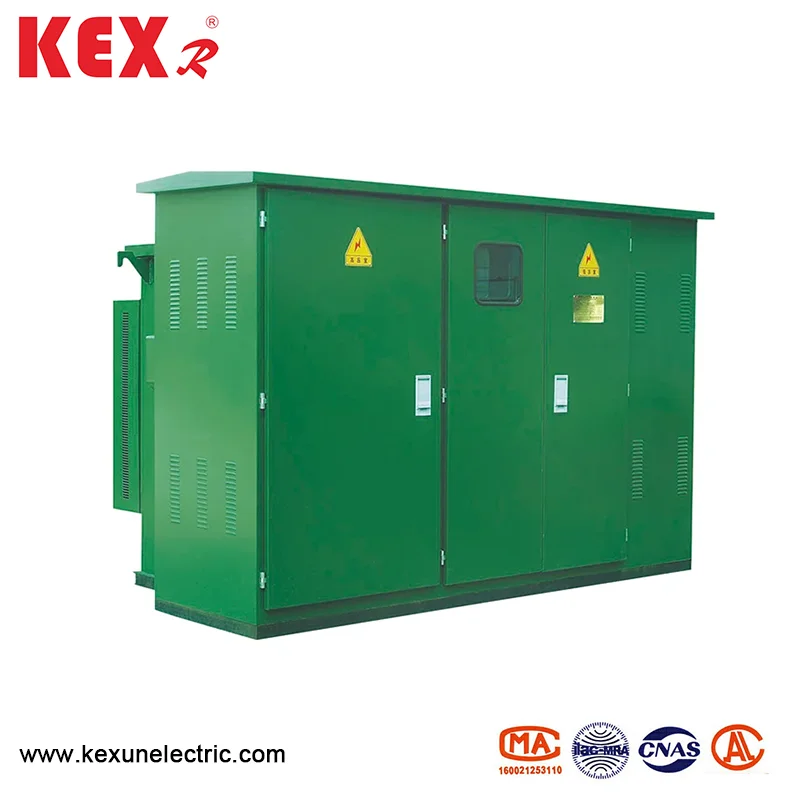
Pre-installed American Box Type Cabinet
Kexun is a power transmission and transformation equipment factory in China. Its beauty Pre-installed American Box Type Cabinet is well known for its good protective performance, high standardization, simple maintenance and wide applicability.
Model: ZBW-12
Brand:KEXR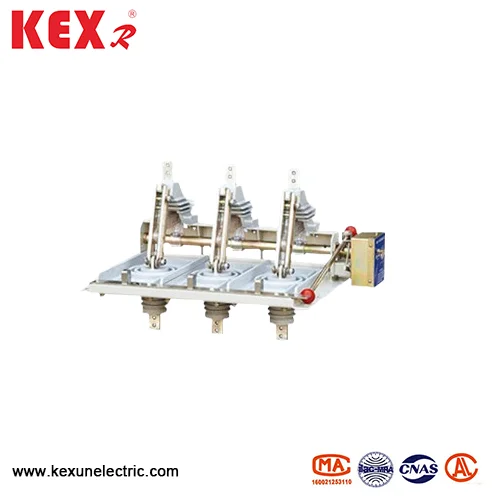
GN38 Type Indoor HV Disconnector
The GN38 type indoor HV disconnector produced by China supplier is equipped with coaxial locking and perfect mechanical interlocking mechanism, which is compact and compact in appearance. It is designed and manufactured to meet the needs of the compact development of fixed high-voltage cabinets and ring network cabinets, and is the best switch for compact box-type switchgear.
Model: GN38
Brand:KEXR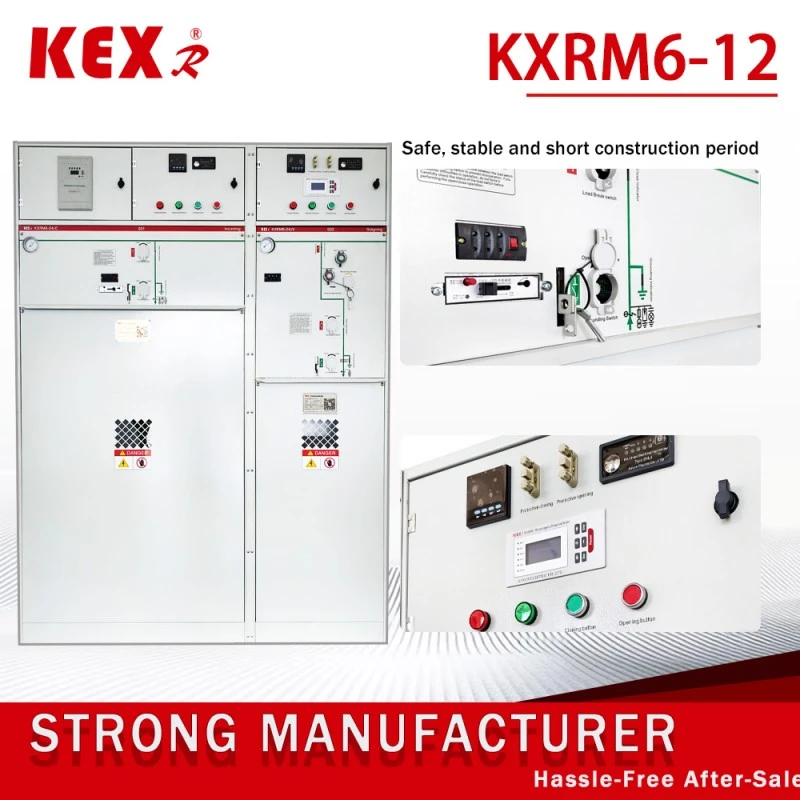
Gas Insulated Electrical Panel
KXRM6-12 Gas insulated electrical panel independently developed and produced by Kexun Electric is widely used in 10kV/6K distribution system. Switch cabinet is modular unit mode, which can be combined according to different purposes; There are two categories: fixed unit combination and expandable unit, which meet the needs of flexible use of compact switchgear in various substations and are the first choice switch products for various urban and rural users' power distribution systems.
Model: KXRM6-12
Brand:KEXR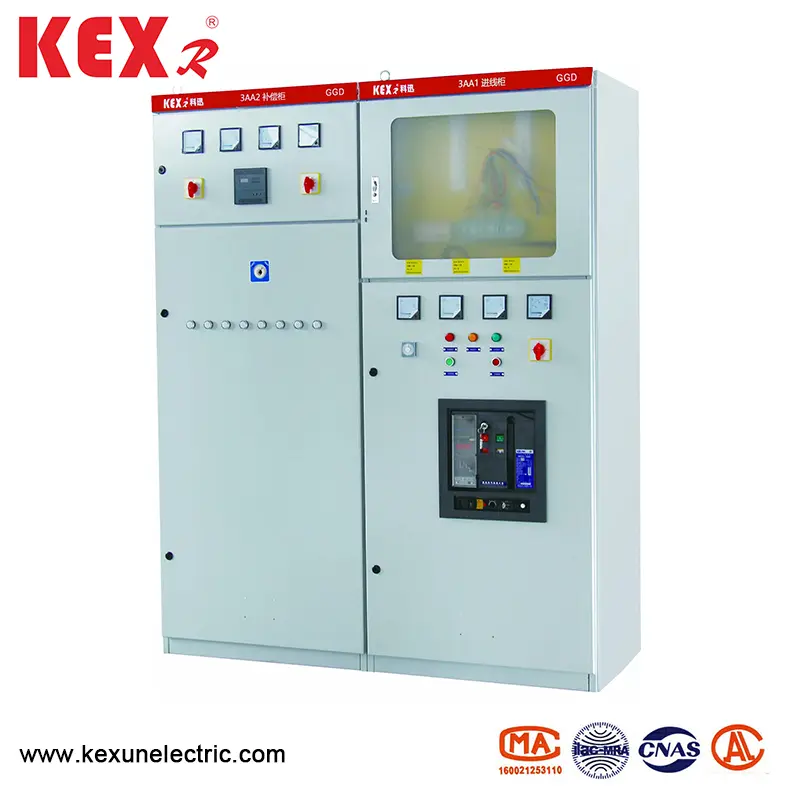
AC Low Voltage Distribution Cabinet
GGD Type AC low voltage distribution cabinet produced by China manufacturer Kexun is suitable for AC 50Hz distribution system of power users such as power plants, substations, factories and mines, with rated working voltage of 380V and rated working current of 3150. It is used for power conversion, distribution and control of power, lighting and distribution equipment.
Model:GGD
Brand:KEXR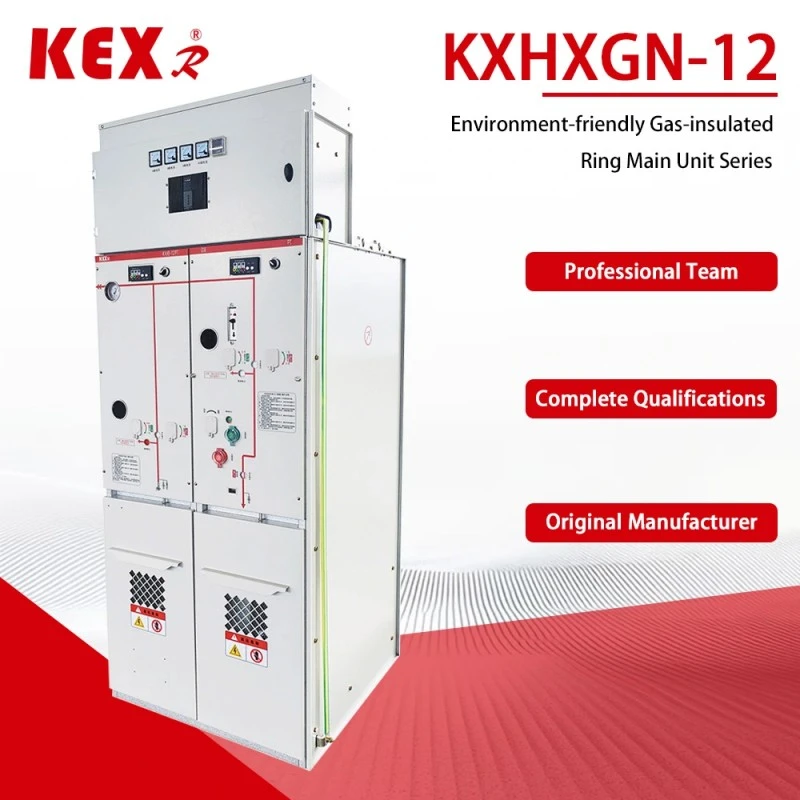
Environmental Protection Unit
KXHXGN-12 type Environmental Protection unit produced by KEXR, a power transmission and distribution equipment supplier in China, is a 12kV gas-insulated ring network cabinet with environmental protection gas (such as dry air, nitrogen or mixed gas) as insulation medium, which is suitable for ring network power supply, terminal power supply and small-scale opening and closing stations of distribution networks.
Model: KXHXGN-12
Brand:KEXR
Box Type Fixed Metal Closed Switch Equipment
The main primary components of XGN2-12 Box Type Fixed Metal Closed Switch Equipment specially produced by Kexun in China Factory are all redesigned. Compared with the handcart equipment and GG-1(A)F equipment which are mainly used at present, XGN2-12 Box Type Fixed Metal Closed Switch Equipment has higher insulation level and protection level, and no phase-to-phase and phase-to-ground clapboards and insulating gas are used inside, and no secondary plug is used in the secondary circuit.
Model:XGN2-12
Brand:KEXR
- Related Blog
- Reviews
